When it comes to picking the right battery for your camper van, it isn’t a ‘one size fits all’
situation. In fact, they come in lots of different sizes depending on how much power you’re
going to need, and there are lots of brands to choose from too.
Batteries are the heart of your camper van build, and they’ll help you to do all of the things
that you do in your own house, just out on the road — from turning on lights to powering
kitchen appliances and charging up phones, even playing the Nintendo Switch, which I did on
many rainy days.
I’ve come across a lot of batteries during my time as a campervan journalist, units at different
price points that have different merits to suit different styles of vanlife and personal budget.
This is undoubtedly one of the most expensive parts of the build by far, other than buying the
van itself. But once you’re on the road and using that free electricity from the sun or your split
charge relay, then you won’t have to worry about paying another electricity bill again!
Understanding Different Camper Van Battery Types
Lead acid
Lead acid batteries work via using lead plates placed in a sealed box of sulfuric acid. The
sulfuric acid in this situation is what we call the electrolyte, meaning a liquid that conducts
positive ions.
This is the scientific part: lead and lead oxide on the plates react with the electrolyte and to
create lead sulphate, which in turn generates power. Then, when you charge your batteries,
the lead sulphate is converted back into its original components.
There are typically six plates inside lead acid batteries that hold around 2.1 volts each. They
tend to not have a long lifespan but don’t take long to charge up. They’re best used in
situations where you’ll be plugging in to campsite electrics as they don’t tend to hold charge
in colder climates for very long.
AGM
AGM might sound like the “annual general meeting” you go to with work every year, but
AGM actually stands for “absorbed glass mat” batteries. They work by allowing the
electrolyte to flow through absorbed fiberglass mat. These batteries have less corrosive liquid
sloshing around in them and are a good choice for conversions that might do a lot of off-
roading. If it cracks or breaks, you won’t need to get a hazmat suit out immediately.
Gel
Of course, if you want to do away with corrosive electrolyte liquids altogether, then 12V gel
batteries could do the trick. They use a gel electrolyte that houses lead plates, allowing
electrons to flit between them with ease. Gel batteries are the natural progression up from
lead acid units. They don’t leak, boast slower discharge rates, and cope much better in hot
and cold climates.
LiFePO₄
Lithium power is used in pretty much all of our modern devices, from handheld computer
consoles to the laptops and smartphones you’re using to read this blog. As I wrote in my
book Van Life For Dummies, LiFePO₄ stands for lithium-iron phosphate batteries. Lithium
ions pass through an organic electrolyte and attach themselves to a negative electrode to store
usable charge. When the batteries are charging, the ions attach themselves to a positive
lithium-iron phosphate cathode.
LiFePO₄ are the real deal. They work in sub-zero temperatures, can cope with deep
discharges, and they’re incredibly reliable in every circumstance. If you’re serious about
vanlife, then this type should be high up on your list. They’re more expensive, but worth
every penny.
My Battery Top Picks
1. Battle Born Batteries
Cost: €864

Photo credit [@sebsantabarbara](https://www.instagram.com/sebsantabarbara/)
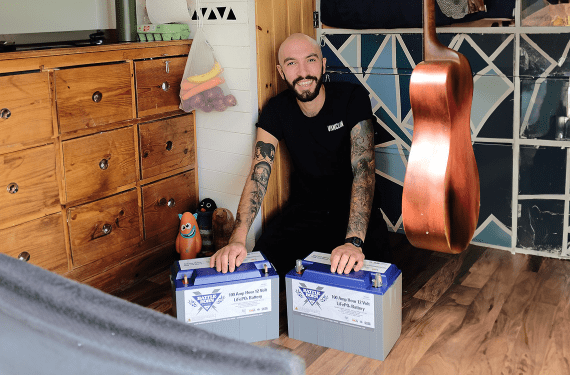
I was lucky enough to work with Battle Born Batteries and try out their amazing LiFePO₄
batteries firsthand. Made in the USA, these non-toxic, renewable energy solutions can be
used in your campervan, tiny home, or even your house. They’re built to withstand anything
you throw at them and are twice as powerful as the lead acid alternative, producing double
the power of a wet battery while staying the same size.
Battle Born LiFePO₄ batteries are easy to install and can hold charge for up to a year when
not in use. So, if you’re only planning a couple trips a year and want to place them in storage
in the meantime, then you won’t have to keep them on a trickle charge when not in use. They
provide 100 amps of power and come with a surge power of 200 amps for a total of 30
seconds when using larger items that you might need on the road, such as power tools.
I used these batteries while living off grid during the Coronavirus pandemic, and they never
let me down once. Even when used with solar panels in wet, gloomy England, I was never
without power. They’re much more expensive than any of the other battery types, coming in
at around €864. So if you’re thinking about just travelling out on a few odd weekends and
hooking up to campsite electrics, then these probably aren’t for you. If, however, you’re
planning ‘the adventure of a lifetime’ or planning to live off grid full time like I did, then you
can’t go wrong with Battle Born.
2. Furrion Trekker 500W
Cost: €523

Photo credit [@sebsantabarbara](https://www.instagram.com/sebsantabarbara/)
It’s not always necessary to have a full battery setup in your camper, especially if you’re only
heading out on weekends or planning to take a little trip not too far from home every now and
again. The Furrion Trekker 500W is a portable battery solution for every situation that is easy
to carry, meaning you can use it to power your gadgets inside your camper or away from your
camp spot or charge up your laptop from a picnic bench or cliff-top writing spot.
Power up blenders, charge smartphones, run power tools, all from one device without
needing to install inverters and or mess around with wiring diagrams. With clean, pure sine
waves generated by lithium-ion power, your expensive devices won’t get damaged while
charging, and you can keep track of how much charge is left on the Trekker thanks to the
LCD display.
The Trekker has a lifecycle of 500 charges, which makes it perfect camper battery solution
for weekend warriors. Recharge from your wall plug or via your 12V car port. Plus, with the
ability to power five devices at once and with quick charging functions as standard, you can’t
go wrong with this portable powerhouse.
3. Numax Ultra Deep Cycle Battery
Cost: Around €106
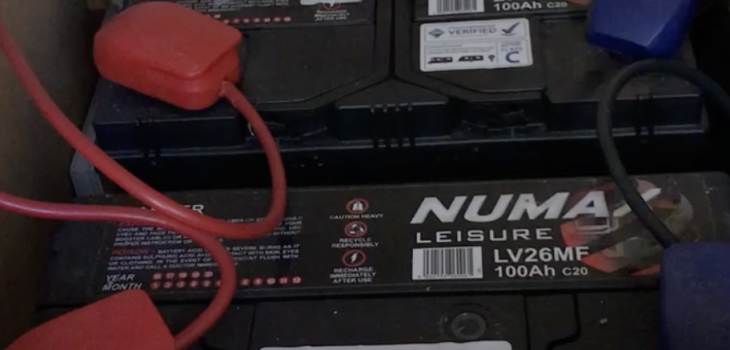
Photo credit [@sebsantabarbara](https://www.instagram.com/sebsantabarbara/)
I know I’ve made it clear that I prefer LiFePO₄ batteries, but I started my vanlife journey off
using Numax lead-acid batteries, so they need a special mention. I used two 100Ah batteries
for years, and while I was in hotter countries with the sun shining on my solar panels for long
periods, they were great. If you’re looking to do vanlife on a budget and you won’t be parked
in shadowy spots for a long time or are planning on staying at campsites where you can hook
up to shore power regularly, then they’ll definitely do the job.
One downside is that lead-acid batteries only last for about three to four years, so you’ll need
to replace them much more regularly than a LiFePO₄ alternative. Still, they’re about one tenth
of the price of LiFePO₄ units, so that won’t be much of a problem. As I’ve written previously,
they don’t do well in the cold either. I’ve had to sit in the front of my van while eating my
food with the engine running and split charge relay going in order to charge them up, but hey,
that’s all part and parcel of the vanlife adventure!
4. Renogy 12V 100Ah Smart Lithium Iron Phosphate Battery
Cost: €561
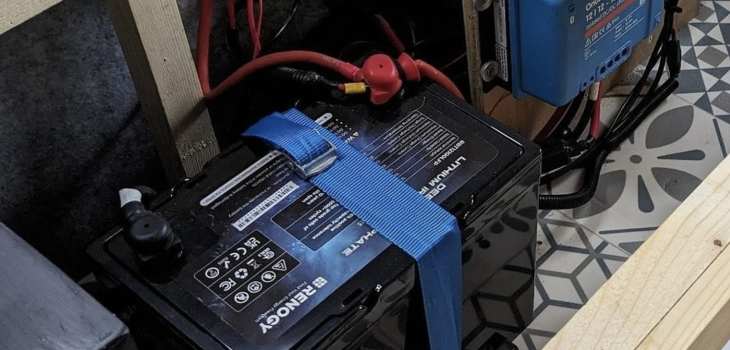
Photo credit [@renogyofficial](https://www.instagram.com/renogyofficial/)
If you’re looking for another alternative to Battle Born batteries, then Renogy lithium iron
phosphate batteries are your next best bet. Whether you’re thinking of camping in the desert
or the arctic tundra, this tried-and-tested brand trusted by companies all around the world will
keep you powered up in every situation.
Leak- and spill-proof with 4,000 cycles, they provide the same reliable power as Battle Born
LiFePO₄ batteries but for around €561. And because they’re smart, you can monitor their
charger levels via Bluetooth® so you never get too low or you know when they’re full.
Thanks to 20 warning triggers and two temperature sensors, they’re some of the safest
batteries on the market too!
5. Portable Power Technology Vehicle Hub
Cost: €1,200+
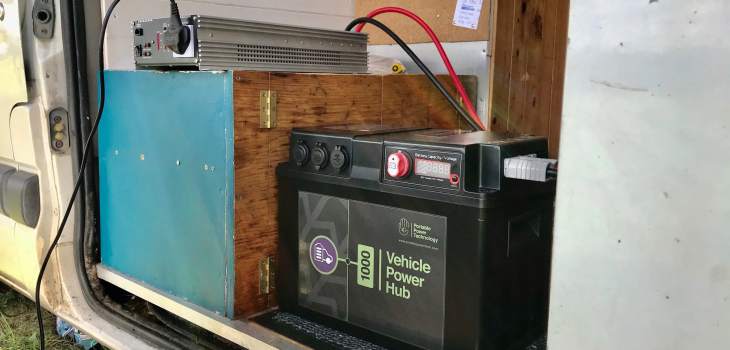
Photo credit [@sebsantabarbara](https://www.instagram.com/sebsantabarbara/)
Portable Power Technology is another company I’ve used for years now, and their vehicle
hub is an impressive campervan solution for anyone who doesn’t want to worry about
making an in depth electric system in their camper. It’s all self-contained, with plug-and-
play adapters that allow you to easily use inverters and solar panels without earthing
anything to your camper.
Inside this sleek battery casing is a 80Ah/1000Wh LiFePO₄ battery. I had mine situated at
the front of my camper while locked down in 2020, and it was an absolute godsend,
allowing me to do outside DIY with ease. At over 1,200 euros, it’s pretty costly, but
considering that you don’t need to buy any wires, earthing points, fuses, or anything else,
it’s actually a pretty great price, considering you’re getting a LiFePO₄ battery with a
simple plug-in solution for other accessories should you want to purchase them at a later
date. It even has built-in USB ports and a 12V marine charging port too – everything you
need for vanlife!
—
A steady, onboard power supply is an essential part of mobile travel. Charging systems from Lippert enable batteries to be perfectly charged and onboard electrical devices to be supplied with power in all situations. Check out our solutions!